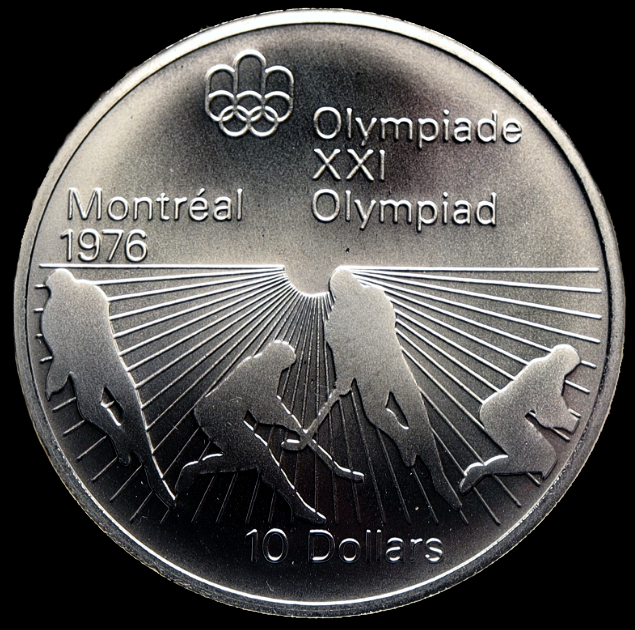
The 1976 Summer Olympics in Montreal were exceptional for a variety of reasons. One of them was the unprecedented decision by the Canadian government and the Royal Canadian Mint to produce coins to help finance the event, three years before the 1973 Games.
When planning for the Olympic Games began, the City of Montreal believed it could finance most of its needs through the sale of a standard Olympic coin, stamps, and lottery tickets. However, as is often the case, the costs far exceeded initial estimates. The construction of the Montreal Olympic Stadium alone cost $1 billion, three times more than anticipated.
Thus, an additional fundraising initiative was launched at the request of the federal government, then led by Prime Minister Pierre Elliott Trudeau. After careful consideration and discussions with the Royal Canadian Mint, the Olympic Act of Parliament authorized the implementation of a large-scale program to produce special Olympic commemorative coins that were legal tender in Canada. Not only did this production span several years, with the first coins being minted in 1973, but the volume of coins produced was much higher than that of any other national currency. A total of 30 unique coins would be produced (28 in silver and 2 in gold), each depicting Olympic events and iconic Canadian locations. The Royal Canadian Mint would create these coins based on designs submitted by Canadian artists.
At the time, Derek Dawson was Director of Products and Logistics and Chair of the Olympic Coin Design Committee. This committee oversaw the selection of artists' designs for the coins, which proved to be a difficult task. The total number of artistic proposals was considerable, but the committee ultimately selected 30 designs.
These coins were also unique in other ways. It was the first time that the Royal Canadian Mint had issued coins with face values of 5 and 10, in addition to offering the first modern Olympic coins with a face value of 100. In terms of production, it was impossible for the Royal Canadian Mint to engrave the required number of coins. New equipment was therefore purchased to enable photochemical engraving, a technology that the Royal Canadian Mint had never used before for this series of coins.
It is also important to note that modern Olympic commemorative coins had only been issued 22 years earlier (in Finland) before the Canadian government implemented this program. The Canadian program was extremely ambitious for its time and involved a certain amount of risk. In the end, everything went well, as the coins were hugely successful and raised a significant portion of the funds needed by the City of Montreal to host the 1976 Summer Olympics.